

Our top picks: The best non-alcoholic gin overall is Siegfried Wonderleaf: herbal, juniper-forward, and the most gin-like in mixed drinks. For an alcohol-free Gin & Tonic, our pick is Lyre’s Dry London Spirit. For a zero-proof Negroni, use Seedlip Grove 42. Non-alcoholic gins aren’t meant to be sipped neat. They work best with tonic or in mocktails.
Non-alcoholic gin is one of the biggest success stories of the low- and no-alcohol boom. That makes sense: gin gets most of its flavor from botanicals, not from the alcohol itself. Still, quality varies enormously. Some bottles taste like real gin with tonic. Others taste like scented water.
We asked bartenders and spirits experts for their recommendations, then tested the most frequently recommended bottles ourselves, in G&Ts, Martinis, and Negronis. These are the best alcohol-free gin alternatives you can buy.
Our best non-alcoholic gin picks
- Best overall: Siegfried Wonderleaf
- Best for an alcohol-free Gin & Tonic: Lyre’s Dry London Spirit
- Best for a low-ABV Martini: Salcombe New London Light
- Best for a zero-proof Negroni: Seedlip Grove 42
- Best for floral G&Ts: Ceder’s Classic
- Best for spice lovers: Windspiel Alkoholfrei
- Most juniper on the nose: Monday Zero Alcohol Gin
Why can’t it be called “gin”?
In the EU and the UK, gin is legally defined as a spirit with at least 37.5% ABV. A product with no alcohol can’t be called “gin,” which is why producers use names like “Wonderleaf,” “Dry London Spirit,” or “gin alternative.” In the U.S., some brands use “zero-alcohol gin,” but the products are the same idea: juniper-led botanical spirits without the alcohol.
How is non-alcoholic gin made?
There are three common methods:
- Distill with alcohol, then remove it. Botanicals are macerated and distilled with alcohol in the usual way, then the alcohol is removed, typically by low-temperature vacuum distillation. This method usually gives the most gin-like aroma. Seedlip, for example, uses alcohol in its maceration and removes it in the process.
- Distill the botanicals in water. The botanicals are distilled with water instead of alcohol to capture their aromas.
- Blend extracts into water. Natural botanical extracts and flavorings are blended into a water base, often with acids, preservatives, and sometimes sweeteners.
How much alcohol is left? It depends on the market. In the U.S., drinks under 0.5% ABV can be sold as “non-alcoholic.” In the UK, “alcohol-free” means 0.05% ABV or less. Most non-alcoholic gins contain no detectable alcohol at all.
How to drink non-alcoholic gin
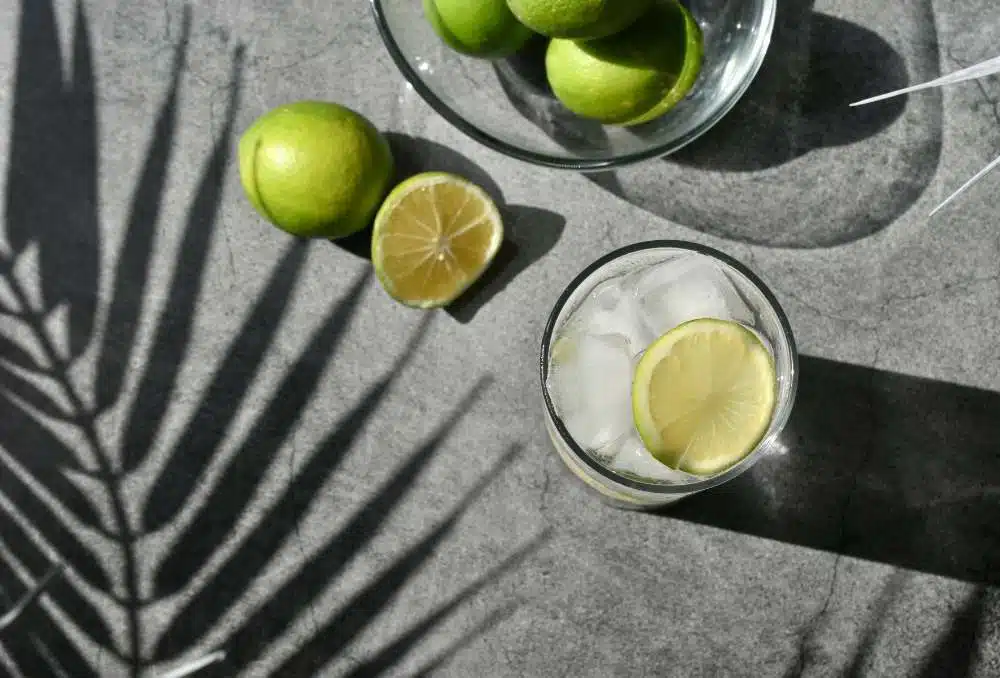
Non-alcoholic gin isn’t designed to be sipped neat. Without alcohol to carry the flavors, it tastes thin on its own. It shines in mixed drinks:
- Alcohol-free Gin & Tonic: The most popular way to drink it
- Zero-proof Negroni: With non-alcoholic bitter aperitif and vermouth alternatives
- Low-ABV Martini: With a splash of real dry vermouth
- Mocktails: In zero-proof versions of the Collins, Gimlet, or Bramble
Tip: Alcohol adds body and carries aroma, so use slightly more non-alcoholic gin than you would real gin (2 oz instead of 1.5 oz), a light or less-sweet tonic, and lots of ice. Aromatic garnishes (citrus peel, rosemary, cucumber, juniper berries) make a big difference.
The best non-alcoholic gin alternatives
1. Siegfried Wonderleaf: best overall

| Origin | Germany |
| Producer | Rheinland Distillers (Bonn) |
| Taste | Herbal, fresh, distinct juniper |
| Price / size | About $30 / 500 ml |
| Pros | Rich, gin-like flavor; great in mixed drinks and mocktails |
| Cons | Hard to find in the U.S.; a bit pricey |
Like all non-alcoholic alternatives, Wonderleaf isn’t really meant to be sipped neat, at least not for me. I was far more convinced once I tried it in an alcohol-free Gin & Tonic and a virgin Negroni.
With other ingredients, Wonderleaf’s herbal, fresh taste comes through. There’s a clear juniper note and a lovely balance of flavors. It’s currently my favorite choice for mocktails. It’s made from around 18 botanicals, mostly secret, though juniper, coriander, and cinnamon are part of the mix. It’s also vegan, sugar-free, and made only from natural ingredients.
2. Lyre’s Dry London Spirit: best for an alcohol-free G&T

| Origin | Australia |
| Producer | Lyre’s |
| Taste | Citrusy, floral, hints of juniper |
| Price / size | About $30 / 700 ml |
| Pros | Nice citrus kick; very gin-like in a G&T |
| Cons | Not much juniper |
Lyre’s Dry London Spirit appears on almost every list of the best alcohol-free gins, and as soon as I tasted it in a G&T, I understood why. Compared to most zero-alcohol options, it brings a very gin-like flavor to the drink, with a bright citrus kick and a pleasant, gently bitter finish that works well with tonic.
The lack of juniper is the main reason it isn’t in our top spot. Otherwise, it’s an excellent alternative, especially with a good tonic water.
3. Salcombe New London Light: best for a low-ABV Martini

| Origin | United Kingdom |
| Producer | Salcombe Distilling Co. |
| Taste | Lime, ginger, juniper |
| Price / size | About $35 / 700 ml |
| Pros | Less sweet than most; intriguing lime-and-ginger profile |
| Cons | A bit thin; mainly sold in the UK and Europe |
Many people are skeptical about non-alcoholic spirits, and so was I. New London Light got glowing reviews in the UK press, though online customer reviews are more mixed.
When I tasted it, I immediately got the flavors of a fairly classic gin: juniper, citrusy lime, and a slight kick of ginger. Overall, though, it tastes a bit thin, and with bold ingredients it doesn’t stand out. I like it best in a low-ABV Martini with a little real dry vermouth.
With tonic, use a “light” or sugar-free one so the spirit holds its ground. Garnish with an orange slice and a drop of orange bitters.
4. Seedlip Grove 42: best for a zero-proof Negroni

| Origin | United Kingdom |
| Producer | Seedlip (majority-owned by Diageo) |
| Taste | Blood orange, bitter orange, mandarin, lemongrass, ginger |
| Price / size | About $32 / 700 ml |
| Pros | Complex citrus aroma; pairs well with other NA spirits; sugar-free |
| Cons | Delicate; hardly any juniper |
Seedlip was founded in 2015 by Ben Branson and is one of the brands that created the non-alcoholic spirits category. Grove 42 is its citrus expression, made with blood orange, bitter orange, mandarin, lemon, ginger, lemongrass, and a prickle of Japanese sansho pepper.
It has a refreshing citrus aroma, but it lacks juniper and is very delicate overall. With bold juices you barely taste it. Where it shines is alongside other alcohol-free aperitifs. My favorite way to drink it is in a zero-proof Negroni.
5. Ceder’s Classic: best for floral G&Ts

| Origin | Sweden / South Africa |
| Producer | Ceder’s (Pernod Ricard) |
| Taste | Fresh and floral, with rooibos and lavender |
| Price / size | About $26 / 500–750 ml |
| Pros | Subtle, smooth, unique floral profile |
| Cons | Easily overpowered; mainly sold in the UK and Europe |
Ceder’s is a Swedish alt-gin made with South African botanicals. What I like most is its unusual flavor profile, partly classic gin botanicals and partly modern flavors like rooibos and lavender, which come through in a drink in a light, subtle way.
That lightness is also its weakness: it’s easily overpowered by other ingredients, an issue many gin alternatives share.
6. Windspiel Alkoholfrei: best for spice lovers

| Origin | Germany |
| Producer | Windspiel Manufaktur |
| Taste | Cloves, cinnamon, citrus, hints of juniper |
| Price / size | About $28 / 500 ml |
| Pros | Prominent juniper aroma; floral-citrus profile; beautiful presentation |
| Cons | Too lemony on the palate |
Windspiel is a respected German gin producer from the Eifel, known for its dry gin distilled from its own potatoes. Its alcohol-free version is beautifully presented. On the nose, you get a strong juniper aroma alongside cloves and cinnamon. On the palate, juniper stays in the background and citrus dominates.
Finding the right tonic was surprisingly hard. I preferred light and sugar-free ones. In cocktails it mainly adds citrus, which makes it tricky in alcohol-free versions of classic gin drinks.
7. Monday Zero Alcohol Gin: most juniper on the nose

| Origin | United States |
| Producer | Monday Distillery |
| Taste | Piney juniper, coriander, warm spice, lime, hint of cucumber |
| Price / size | About $40 / 750 ml |
| Pros | Gin-like aroma with juniper, warm spice, and coriander |
| Cons | Heavy on lime; thin on its own |
Monday was founded on a simple idea: enjoying a tasty drink without the next-day consequences. The label lists ingredients including natural spring water and monk fruit extract.
It looks slightly cloudy and smells of juniper and cucumber, with warm spices in the background. Neat, it’s bitter with bold, acidic lime. With ice and tonic it improves a lot, and the juniper and citrus come forward.
The best alcohol-free gins compared
| Brand | Taste | Price | Size | Origin | Best for |
|---|---|---|---|---|---|
| Siegfried Wonderleaf | Herbal, juniper, fresh | $30 | 500 ml | Germany | Overall, mocktails |
| Lyre’s Dry London Spirit | Citrus, floral, light juniper | $30 | 700 ml | Australia | G&T |
| Salcombe New London Light | Lime, ginger, juniper | $35 | 700 ml | UK | Low-ABV Martini |
| Seedlip Grove 42 | Orange, mandarin, lemongrass | $32 | 700 ml | UK | Zero-proof Negroni |
| Ceder’s Classic | Floral, rooibos, lavender | $26 | 500 ml | Sweden | Floral G&T |
| Windspiel Alkoholfrei | Citrus, cloves, cinnamon | $28 | 500 ml | Germany | Spiced G&T |
| Monday Zero Alcohol Gin | Juniper, spice, lime | $40 | 750 ml | USA | Juniper lovers |


miss gin and tonics
Which non-alcoholic gin tastes the closest to London Dry Gin?
Where can I buy or order?